



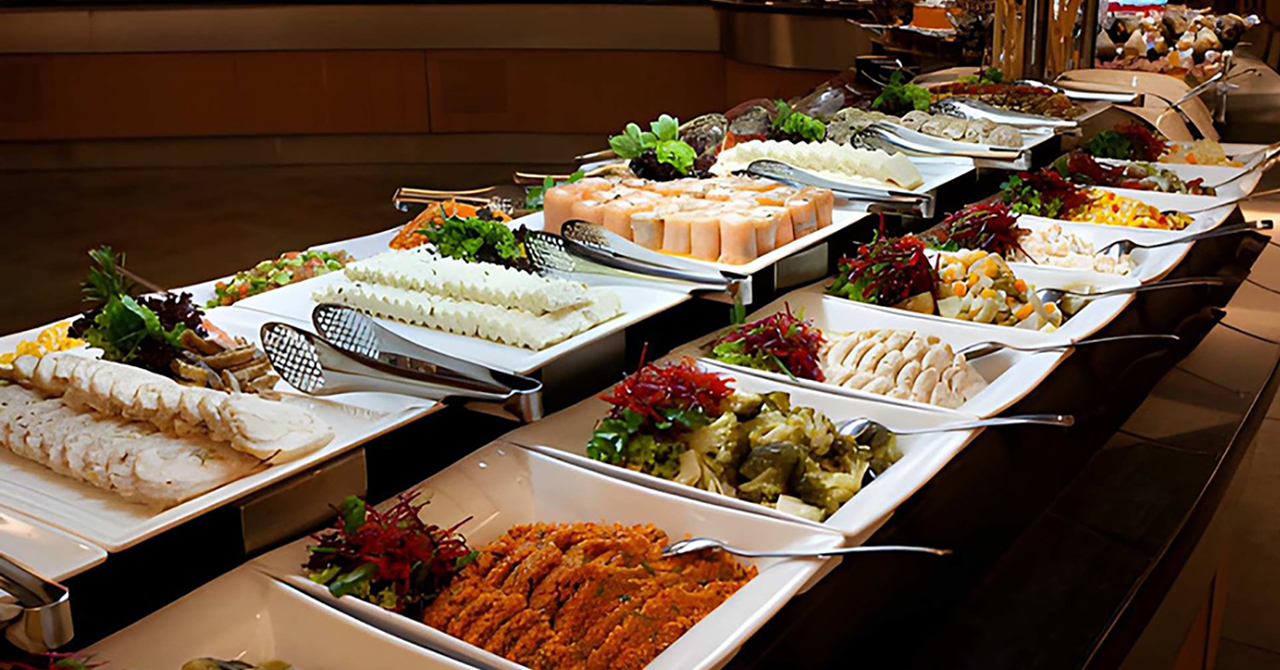
The illusion of Luxury hotels’ buffets
When you walk into a luxury 5-star hotel buffet, the buffet spread looks amazing. You see tables piled up with dozens of different dishes like the bakery items, sprouts, different cold-cuts, salad stations, number of desserts and few live counters. This visual spectacle is designed to evoke a sense of limitless culinary luxury. It looks grand, expensive, and attractive.The hotel wants you to feel like you can eat anything and everything you want. But once the breakfast or dinner shift ends, the reality changes completely. A huge quantity of prepared food items is found as surplus and are coded as waste or to be transferred to another area or to be thrown into waste bin.
The grand scale of these food spreads is rarely dictated by actual human appetite nor it is the wish of the guests. In luxury hospitality, the abundance has long been a primary marketing lever used to justify a premium selling price of the buffet service and at present the buffet food service has been identified a profitmaking tool in food & beverage sales. Hotel management structures the large buffet model as a gimmick for the guests. The guests believe that they are receiving an elite experience in the luxury hotels because of the sheer variety of foods that reflects a position of financial status. In reality, the average human can only consume a fraction of that is on display. The excess variety of food spread is an intentional prop; a calculated cost built directly into the ticket price of the buffet menu.
Once a tray of food is laid out on a buffet line, it enters the "temperature danger zone" as per the food safety laws. The food is exposed to ambient restaurant temperatures, multiple touches of serving spoons, sneezes of hundreds of guests. Such foods become a legal liability for the guests’ hygiene health. Consequently, health codes dictate that any food exposed to the public line cannot be legally reused or donated. At the end of the night, lots of pastries, cheeses, and cooked dishes from the active buffet line are dumped directly into wastebins.
However, the modern hospitality industry operates on a system to mitigate the loss from their back-of-house reserves. Food that has been prepared but kept safely stored in temperature-controlled cabinets in the kitchen, never went to the buffet, is handled differently. A significant portion of these unserved and untouched food items are diverted to the staff cafeteria to feed the hundreds of employees working around the clock.
The anatomy of the modern 5-Star luxury buffets
The hotel intentionally creates a psychological illusion of food luxury through massive display to justify premium buffet ticket prices and to influence the guests. The hotel makes the guests feel a position of their financial status. The "entire buffet for you" fallacy- Guests eat only a fraction of what is being displayed; the vast majority of the sprouts, salads, bakery items, and dessert sections act to some extent as visual props rather than real food options. The visual props add to the profitability of the buffet which subsequently contribute to the food and beverage revenue.The Shelf-Life of a 5-star Luxury buffet
The huge costly buffet spread consisting number of food items quickly deteriorates within few hours under heat lamps and ice beds. let’s have a look at this.The initial ingredients/ items like sprouts, greens, and raw salads look fresh but when exposed to ambient light, air, and heating lamps over hours they rapidly lose nutrients (like Vitamin C and B-complex) while the leafy salads look dull. Bakery & confectionary products dry out after few hours and the uncovered desserts lose their texture & moisture, making them pale and stale by the end of the buffet meal shift.
Food safety and the Surplus Buffet foods
At the end of the restaurant buffet food shift, generally one can find plenty of surplus food on the food pan. Food safety regulations strictly forbid the re-use of the food that has been placed on the public line due to contamination risks. These items legally should be dumped into wastebins.Untouched Kitchen Back-stock
Food that was prepared but was never out of the temperature-controlled cabinets in kitchen should be transferred to the staff cafeteria.
CSR and slum donations: Under Corporate Social Responsibility (CSR) and food safety laws, only untouched food from the kitchen can be donated to non-profits and shelter homes. Publicly exposed food (restaurant buffet/coffee shop) cannot legally be distributed to disadvantaged communities.
Do all hotels follow the food safety rules regularly ?
The ripple effects of consistent large buffets on soil, farmers and markets
Five-star hotels demand consistent and flawless vegetables, fruits, cereals, pulses, meat, fishes etc. year-round, putting immense stress for procurement on local markets. To meet these rigid, inflated, continuous, and commercial volumes, the local farmers are forced to abandon sustainable crop rotation and start relying heavily on chemical fertilizers to ensure high yields out of the exhausted soil, which systematically destroys the land's natural fertility. Such practice This demand for uniform, exotic vegetables, or out-of-season vegetable or fruits strains local agriculture ecosystems.
Hence, it is understood that the limitless buffet display in five-star hotels have a direct relation on the food waste and an impact on the local agriculture. This must be communicated to the society effectively. Let’s hear few voices of the consumers.
--- Voice of few consumers ---
Voice of a Senior Medical Officer (Research), Dr G C Sahu. Ahmedabad.
There is something weird about the five-star buffet culture that is prevalent in our country where large mass of people still finds it hard to arrange two square meals a day. The food that is spread and served in those luxurious spaces cater mostly to an elitist community that is immersed in an ultra-luxurious life style with scant regards to issues like widespread hunger, food security, colossal wastage of food, food hygiene etc. The food that is laced with preservatives and repeatedly served, lose their nutritional values gradually. The cross contamination that might be occurring because of sharing of food items from a common source mostly remain oblivious to the guests enjoying such indulgences. The food should be simple, seasonal, hygienically prepared and nutritious.
Voice of a Millennial - IT Project Manager, Hong Kong based company at Bengaluru
As a working millennial, I still enjoy a 5-star buffet, but my priorities have changed. I, now do not think about the entire buffet spread but think more about food quality, its nutritional and how much I need to relish Not to waste the food. I would definitely consider a well-curated, nutritious 3-course menu over a 50-dish buffet spread if it significantly reduced food waste. For me, premium dining is about quality rather than quantity. We must understand that a significant percentage of people around the globe are starving for food. Hence, we must not waste food in any form of dinning. I think awareness of the environmental impact of food waste is growing among millennials, although convenience and the perception of abundance still influence our choices.
Voice of a Home maker- Meera Mohanty, Bhubaneswar
The massive, elaborate buffet spreads at 5-star hotels certainly looks luxurious and impressive, but as someone who efficiently and effectively manages a home kitchen, I can’t help wondering how much of that food will actually be eaten. Presuming that most of the left overs in buffet are not reused but thrown away; at home, I plan quantities based on the family’s needs, so such large displays naturally make me think about potential wastage.
At home, using leftovers creatively is simply ideal kitchen management. At a hotel, I would be comfortable with untouched food being safely managed or repurposed, but I would expect anything served to guests to meet proper food-safety standards. I think luxuriously elaborate buffets can encourage and tempt people to take more than they need. At home, we usually take a smaller portion first and go back for more if required. The same approach could reduce waste at buffets which calls for general awareness amongst customers.
The biggest lesson from a home kitchen is planning according to actual consumption. Hotels could use their experience and consumption data to identify what is popular and prepare smaller batches accordingly. I don’t think reducing food waste means reducing luxury—it means managing resources more thoughtfully.
Voice of Executive Board Member of IFCA & former VP ITDC hotels
Chef Sudhir Sibal
During year (1980-2000). Even after 2000 the buffets in 5-star hotels used to provide number of food items in the buffet. Few were props, but the total numbers of the dishes displayed were not as high as now that are served. There was food surplus during that period too. The surplus food was given to the NGOs to be distributed to the disadvantages. But in present days the number of Buffet items in the breakfast are 60 to 70 in five-star hotels. In Dinner the number of buffet items are as high as 70. The modern-day clients’ behaviour has changed a lot. Clients’ expectation is more. They are willing to spend more for the buffet parties in their celebrations, they demand more items and more displays. The five star premium luxury hotels even display up to 100-120 items in buffet. Some say it is the brand guidelines of the MNC hotels to display the minimum number of food items in buffet. Now the food safety rules are more stringently enforced. It is a practice in the five-star premium luxury hotels to discard and dispose the surplus buffet food items. Having said all, I think do we need so many items to place in Buffet only to find many food items are left unconsumed? We should educate the hotel clients and the guests to go for limited number of quality food items hygienically prepared and served.
Voice of a Gen Z: Priyansh Tailang. B-TECH student. Ahmedabad
It negates my view towards the hotels’ environmental responsibility and makes me feel as if they are compensating their quality by showcasing quantity. While luxury in my view means that you can provide the services that the customer wants without much hassle showcasing how much food you can make only lowers my feeling of returning to that place again I do feel that the sheer volume gives a compromise on the quality, freshness and taste of the dishes. I feel as if the hotel’s management does not know their own clientele, their footfall and that feels like the hotel is not properly managed.
I would like the food to be properly curated and the quality to be higher. The taste would be better and food wastage would be lower as well. More of live counters for food to be order.
Voice of another Gen Z - Noyonica Sirkar BTEC student. Ahmedabad
A massive spread definitely showcases food luxury and abundance, but the thought comes how much food is consumed and what amount will be left unconsumed comes to the mind. If the surplus food quantity is huge, then it questions me, whether it’s simply going to be thrown away? I feel, food should be prepared carefully in small portion with Nutrition. And the ones which are prepared on demand, in small quantities, seem fresher, and tastier.
The display does look very interesting and attractive and also gives wide options to choose from. But if given a made to order option menu, it would can be kept in check and the surplus food would be minimized.
Conclusion and reimaging 5-star Luxury food buffets
The implications of this institutional overproduction extend far beyond the hotel walls and directly into the soil of our agricultural system. To maintain a constant and consistent supply of perfect produce, whether it is lettuce leaves without blemish for the salad bar or uniform size fruits for the dessert garnishes, the hotels place immense pressure on local procurement markets. The local market gets business as the hotels pay higher prices for the local vegetables and all food items while the native people purchase the local produce with higher price. Responsible food consumption starts from home and it should reach the luxury hotels. We must realise that we may have sufficient money to buy the luxury buffets tickets and waste food knowingly or unknowingly, but we must know that the produce belongs to the nation and we do not have any rights to waste the nation’s resources.
The hotels should shift hotel metrics from "number of dishes" to "precision of taste." Example- the Ala Carte menu & Set Menu. There should a rewarding system for the hotels who adapt majority of their menu items daily, based on seasonal and actual local harvest. The hotel should request the guests to places their food choice in advance so that their preferred menu items to be served to them quickly, resulting less food surplus and waste. Hotels should promote conscious and low-waste dining as the new status symbol of high society. Ultimately, educating the society and making the school going children understand the value of food and importance of agriculture should be mission by the luxury hotels while not compromising the comforts of the high paying guests.