



The Echoes of Sujanpur: Remembering the Joint Family and Understanding Our Modern Isolation
Reflections on a 1970s Childhood in Puri District, Odisha, and the Changing Fabric of Indian Family Life.
The Legacy of Late Natabara Mangaraj and Late Chakradhara Mangaraj
Every year during the summer months of the 1970s, a quiet magic unfolded along the railway tracks of Puri district in Odisha. As soon as the school examinations ended, children from across the state packed their small trunks and boarded trains bound for their ancestral roots. Because our father and his four brothers were all government employees posted in different corners of Odisha, the families arrived in phases. One by one, train after train, the cousins stepped down onto the platform of a small railway station called Motari.
Stepping off that train felt like entering another world. Waiting just outside the station were two sturdy bullock carts sent specifically by our grandfather to bring us home to our village, Sujanpur, roughly four kilometers away. Today, people judge luxury by air-conditioned cars, smooth highways, and high-speed travel. Back then, climbing onto the wooden bed of those bullock carts, listening to the rhythmic clatter of the wooden wheels on the dusty village track, and feeling the gentle sway as the bullocks trotted toward Sujanpur was the luxury. It was a joyful, bumpy procession filled with laughter, eager chatter, and the growing excitement of knowing that our cousins were waiting at the end of the four-kilometer road.
Once we reached Sujanpur, the real celebration of life began. We belonged to a grand joint family of nearly fifty people. Our grandfathers were three brothers, and our father was one of five brothers. When all five branches of the family gathered under one roof for those precious summer weeks, the ancestral house came alive with an energy that is almost impossible to describe to the younger generation today.
Close your eyes and picture a summer afternoon in that courtyard. The sun stood high in the sky, baking the fields outside, yet inside our homes it remained remarkably cool. The thick thatched roofs, woven with skill, dried straw, and generations of rural wisdom, acted as a natural shield against the summer heat. There was no electricity in the village during those years. There were no ceiling fans whirring overhead, no coolers, and certainly no air conditioners. Yet, nobody complained about the heat, and everyone slept peacefully at night. You do not miss a comfort you have never known, and when your heart is full and your body is tired from honest play and fresh air, sleep comes naturally.
At the heart of our summer afternoons was our own family pond. Every day, the water rippled with splashes and shouts of joy. Around 10 to 15 young children, our own brothers, sisters, and cousins, gathered at the water's edge to bathe and play. It was in those very waters that my brothers and I learned how to swim, carefully trained and watched over by our father. Meanwhile, standing proudly on the bank, our grandfather would call out to his helpers to cast their nets into the pond to catch fresh fish for our lunch. All of us would crowd around the edge in breathless curiosity, watching the net tighten and shimmer with silver fish pulled straight from the water to the kitchen.
Inside the sprawling kitchen, all the women of the family, mothers, aunts, and grandmothers, worked together in a seamless rhythm. The cooking was done entirely on wood-fired chullahs. Thin trails of fragrant woodsmoke curled upward as massive brass and earthen pots simmered with rice, lentils, vegetables, and the fresh fish from our pond. The sheer quantity of food cooked every single day was enormous, enough to feed a small regiment. As the mealtime arrived, watching twenty-five children sit together in rows to eat breakfast, lunch, and dinner with banana leaves was a sight of pure abundance and unity. Nobody asked whose plate had more or whose father earned more; every child ate from the same common pot.
The celebration of RAJA festival is quite memorable. Generally, this festival coincides during the month of June. Though it is a festival for the ladies still we join in celebration. Special types of Pithas (Cakes/delicacies) are prepared by our aunts. We had a large rice harvesting/cultivation ground of paddies where the grains are stacked and piled up. The rice grains are separated through threshing process is worth seeing.
As dusk settled over Sujanpur and the birds returned to their nests, the village underwent a gentle transformation. Without electricity, the darkness was soft and natural. Kerosene lamps and glass lanterns were cleaned, lit, and placed in the rooms and corridors, casting warm, golden pools of light and long shadows against the walls. By the steady glow of those lamps, we children opened our study books and completed our holiday reading.
Meanwhile, out on the long front veranda, the elders, our three grandfathers, our father and his four brothers, and the senior respected men of the village, assembled on woven mats and cots. The village Pandit would arrive, open the sacred pages of the Ramayana, and begin reading and explaining its verses. Listening to his voice echo through the quiet evening air was a profound spiritual education, not just for our family, but for the village. At the end of the Ramayan session, prasad was distributed to all.
When night finally deepened, rows of white mosquito nets were tied across the rooms and verandas, looking like soft white clouds resting in the dark. Protected from mosquitoes and wrapped in the warmth of the family members breathing under the same roof, we drifted off to sleep, eagerly awaiting another day of the same simple, glorious routine.
Fifty Years Later: A Heartbreaking Contrast
Now, step forward fifty years to the present day. If you travel to Motari station and walk those four kilometers to Sujanpur, the contrast breaks the heart.
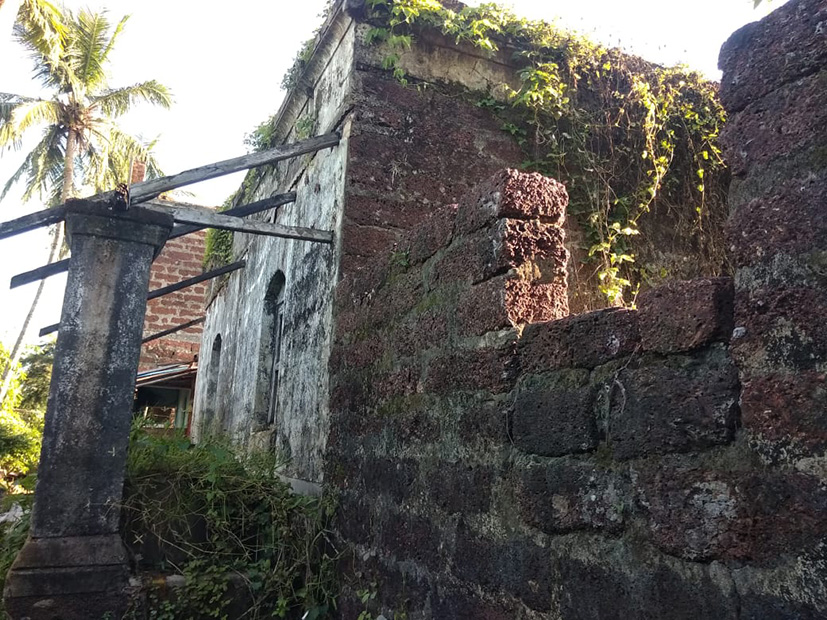
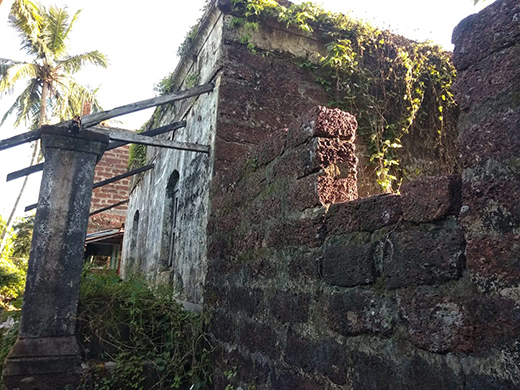
Our grandfathers are no more. Our father and mother have left this world, and all four of our father's brothers have also passed away and all the aunts too are no more. Without the generation that held the family together, the village looks dead. The old ancestral houses that once rang with the laughter of twenty-five children now stand deserted, silent, and broken. Nobody visits the village anymore. On the rare occasion when someone does make the trip, they stay for a few hurried hours, look around at the crumbling walls, and leave before sundown.
The twenty-five cousins who once swam in the same pond, rode in the same bullock carts, and ate from the same kitchen are now scattered across different cities, states, and corners of the country and they have become grandfathers now. Active communication among us has nearly vanished.
Today, we only hear from one another, and get connected through mobile phones, when someone dies in the joint or extended family, we get the news because we have to follow some death rituals for the blood relations. Happy occasions, milestones, and festivals are rarely communicated. Even when they are shared, it is done merely to maintain a hollow formality. We have drifted so far apart that nobody is casually invited to another's house even in good times. Worse still, we have reached a state in society where one has to seek formal permission and fix an appointment just to visit a relative's home.
How did we travel from the open courtyard of Sujanpur to the locked doors of today? To understand this painful transformation, we must look closely at the true value of the joint family system we lost, and the powerful social, economic, and psychological forces that slowly dismantled it.
True Value of the Joint Family System
To many young people today, a fifty-member joint family sounds crowded, noisy, and lacking in personal freedom. They look at it only through the lens of inconvenience. However, those of us who lived inside that system know that it was far more than a living arrangement. It was a complete human ecosystem that protected, educated, and nourished every member from birth until death.
1. An Unshakeable Emotional and Financial Safety Net
In the 1970s, middle-class and rural families did not have modern financial safety nets. There were no comprehensive health insurance policies, no corporate emergency funds, and no professional elder-care agencies. The joint family itself was the insurance policy.
Because five brothers stood shoulder to shoulder under the guidance of three grandfathers, no single nuclear unit ever faced life's storms alone. If one brother fell sick, the others took care of his medical bills and looked after his children. If someone faced a transfer, a financial shortage, or a personal crisis, the collective strength of the household absorbed the shock.
Knowing that fifty people stood behind you gave every individual a deep, quiet confidence that modern bank balances rarely provide. Though it was not the case in all joint families but was found in many families.
2. Effortless Sharing and the Death of Selfishness
When twenty-five cousins grow up eating breakfast, lunch, and dinner together, sharing stops being a moral lesson taught from a textbook and becomes a natural instinct. In a joint family, a child quickly realizes that they are not the sole center of the universe.
You learn to wait your turn, to divide a sweet into equal pieces, to adjust to different temperaments, and to find happiness in a cousin's achievement. The bullock cart ride from Motari station was fun precisely because it was shared. The fresh fish from the pond tasted sweeter because twenty-five hungry children were enjoying it together. That environment naturally cured the human tendency toward selfishness and entitlement.
3. Living Moral and Spiritual Education
In Sujanpur, nobody had to enroll children in personality development classes or ethics workshops. Values were absorbed effortlessly through daily observation.
When children watched five grown men, all respectable government officers, bowing their heads and deferring to their elders on the veranda, they learned humility and respect. When they watched their mothers and aunts cooperate in a hot kitchen over wood chullahs to feed fifty people without complaining or keeping score, they learned sacrifice and teamwork.
And when the village Pandit read the Ramayana every evening while elders and villagers listened in peaceful silence, spirituality became a living, breathing part of everyday life rather than a rushed ritual performed once a year.
Almost every night during the summer breaks our aunts used tell us few stories while we go to bed. While listening the stories few of us go to sleep immediately.
4. Shared Parenting and Dignified Aging
Raising children in a joint family never rested on the exhausted shoulders of a single mother and father. Aunts, grandmothers, and older cousins were always present to soothe a crying infant, oil a child's hair, supervise homework beside a kerosene lamp, or correct bad behavior with gentle authority.
At the other end of life, growing old was never accompanied by the terror of loneliness. Grandparents remained the respected pillars of the home until their final breath. Their stories were heard, their blessings were sought, and their daily presence brought stability to the entire household.
Disintegration of Our Joint Family System
The collapse of the joint family did not happen in a single year, nor was it the fault of any one person. It was the result of a gradual, decades-long shift in how we earn our living, how we build our homes, and how we view ourselves.
1. Economic Migration and Distant Livelihoods
The seeds of physical separation were already visible in the 1970s when your father and his brothers took government jobs across Odisha. However, because those postings were within the same state and summer vacations were long, the ancestral village of Sujanpur remained the magnetic center that pulled everyone back every year.
Over the next thirty years, the Indian economy transformed rapidly. Employment shifted from local government offices to national offices in the country, private corporations, IT hubs, multinational companies, and overseas careers. The next generation, your children and your cousins' children, moved to Bhubaneswar, Bengaluru, Hyderabad, Mumbai, Delhi, and foreign countries.
When careers demand twelve-hour workdays in distant metropolises and school calendars leave barely a week of free time, returning to a village for weeks at a time becomes logistically impossible.
2. Passing of the Anchoring Generation
Every large extended family survives because of an anchoring generation, the elders who grew up together in the ancestral home and carry an emotional bond stronger than distance.
As long as your grandfathers, your parents, and your father's four brothers were alive, Sujanpur had a beating heart. They maintained the thatched roofs, tended the pond, arranged the bullock carts at Motari station, and insisted that the family gather every summer.
Once that generation passed away, the bridge connecting the twenty-five cousins collapsed. Without the elders to summon everyone home, each branch retreated into its own separate city life. The ancestral house fell into ruin because nobody lived there permanently to care for it, and coordinating repairs from five different cities became nearly impossible.
3. Modern Comforts and the Decline of Tolerance
In the 1970s, the lack of electricity and modern amenities actually forced people to stay together. You sat in the open courtyard to catch the evening breeze; you gathered around the same kerosene lamps to read; you assembled on the front veranda because there was nowhere else to go in the dark.
Modern technology gave us wonderful physical comforts, electricity, air conditioners, televisions, personal bedrooms, and smartphones, but those comforts quietly separated us.
When every family member can retreat into a cool, private bedroom with their own television or mobile screen, they no longer need the courtyard or the veranda. Worse, as we grew accustomed to high levels of physical comfort, our tolerance for minor inconveniences disappeared. The younger generation, raised with air conditioning and modern bathrooms, views a thatched house without electricity or a shared village pond not as a romantic adventure, but as an unbearable hardship.
4. Urban Architecture and the Nuclear Mindset
Cities were not built for joint families. When families migrated to urban centers, they moved into compact two-bedroom or three-bedroom apartments. Physically, you cannot fit fifty people, or even fifteen people, into a modern city flat.
As living spaces shrank, our mental definition of 'family' shrank along with them. In Sujanpur, 'my family' meant fifty people. In a city apartment, 'my family' narrowed down to husband, wife, and one or two children.
Urban parents poured all their financial resources, time, and anxiety into raising their own children to survive a hyper-competitive academic and corporate world. In that high-speed race, extended relatives slowly moved from the center of life to the distant margins.
Nobody Invites Anyone Anymore: The Age of Formal Permission
Are We That Busy?
Perhaps the most heartbreaking symptom of this social shift is what happens between cousins and relatives today. Why do we no longer drop by each other's houses? Why are happy occasions kept quiet, why do we need prior permission to visit, and why does it take a death in the family to make the phone ring?
-
The Death of Spontaneous Hospitality
In the village, time moved with the sunrise and sunset. Households ran on simple, flexible routines. Whether twenty-five people sat down for lunch or thirty people arrived unexpectedly, the wood chullah was lit, extra rice was put into the pot, and everyone was fed with warmth.
Today, urban life runs on rigid clocks, office shifts, traffic jams, coaching classes, and strict weekend errands. An unannounced guest is no longer greeted with the ancient joy of 'Atithi Devo Bhava'. Instead, an unexpected visitor is often seen as an interruption to a tightly packed schedule.
-
Precise Household Economics and Routine
Modern urban kitchens operate on exact calculations. Groceries are ordered on mobile apps in measured quantities, domestic helpers work fixed hours, and both spouses often work outside the home.
Because modern homes are not geared for sudden abundance, hosting guests requires advance planning, shopping, and taking leave from work. Consequently, spontaneous invitations have been replaced by formal appointments.
-
Fear of Comparison, Ego, and Judgment
When everyone lived together in Sujanpur and rode the same bullock cart from Motari station, there was complete transparency. Everyone knew everyone else's income, struggles, and lifestyle. There was no room for false pride.
Today, because cousins meet once in several years, visits have turned into exhausting performances. People worry about how their apartment looks compared to a wealthier cousin's house, whether they can afford expensive catering, or whether their children's achievements measure up. To avoid feeling judged or to hide personal struggles, people simply stop inviting one another.
-
The Illusion of Connection via Smartphones
Mobile phones and social media have played a cruel trick on human relationships. By exchanging forwarded festival greetings on WhatsApp or glancing at photos on a screen, people trick themselves into believing they are 'in touch.'
This shallow digital contact satisfies just enough social guilt to prevent people from picking up the phone for a real, heartfelt conversation. Happy occasions—a promotion, a new home, a child's graduation—are either celebrated quietly within the four walls of the nuclear home or shared via a brief, formal message sent merely so nobody can complain later.
-
Why Only Death Still Unites Us
Death is the one reality that modern schedules, egos, and excuses cannot override. When someone passes away, social duty, ancestral memory, and the finality of loss force people to pause their busy lives, book a train or flight ticket, and dial their cousins' numbers.
It is a tragic irony of modern life that grief has become the only bridge strong enough to bring an extended family together, while joy is kept locked behind closed doors.
Keeping the Spirit Alive
Standing at sixty-four years of age, having lived in both worlds, you carry a rare and precious perspective. You have experienced the warmth of fifty people sharing one roof, the joy of a four-kilometer bullock cart ride from Motari, the cool shade of a thatched house, and the wisdom of the Ramayana spoken under the glow of kerosene lamps. You also see clearly the cold, formal isolation that has replaced it.
We must accept an honest truth: we cannot turn back the clock to the 1970s. We cannot bring back the grandfathers, parents, and uncles who have passed away, nor can we expect cousins scattered across modern cities to permanently abandon their careers and return to the village life. The physical structure of the joint family belongs to a chapter of history that has closed.
Yet, while the physical structure cannot be rebuilt, the spirit of Sujanpur does not have to die completely. A family does not truly perish when the walls of its old house crumble; it perishes only when the living members stop remembering who they are to one another.
Even in an era where city life demands a phone call before visiting, the warmth behind that call can be rescued. It often takes just one elder, someone like you, who still remembers the taste of fresh fish from the village pond and the laughter of twenty-five cousins eating together, to gently break the ice.
Picking up the phone on an ordinary afternoon with no bad news and no formal occasion, sharing stories of Motari station and the bullock carts with the younger generation so they understand their roots, or organizing even a simple annual reunion at a neutral place can slowly thaw the formality that has frozen our relationships.
The thatched roofs of Sujanpur may be broken, and the lanterns may no longer be lit at dusk. But the values forged in those summers, unconditional hospitality, shared joy, humility, and genuine belonging, remain the exact medicine our lonely modern world is starving for.
Refusing to let our family ties shrink into mere death announcements is the finest tribute we can ever pay to the elders who built that golden world for us.